Chimineas: Clay vs Cast Iron
- Post created by: Simon D.
- 4 Feb 2022
So you're thinking about buying a chiminea - great!
One of the questions you may find yourself asking is 'should I choose clay or cast iron?'
Both are great, and as you would expect, both have their different appeals.
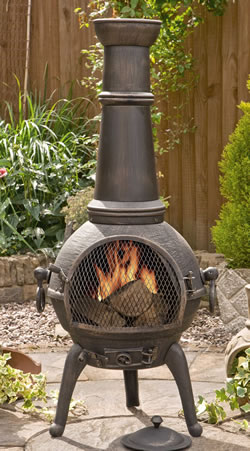
Cast Iron Chimineas.
The most durable variety of chiminea is the Cast Iron range.
The iron chimineas can withstand a lot more heat, allowing the user to burn wood or coal straight away with no need for an initial curing process. There are no restrictions on wood, coal, lighting fluid etc, the robust cast iron will take the heat!
The ability to burn coal also allows the user to be able to cook food on their chiminea, any a lot of products come as standard with a grill included specifically for this purpose. Wood is generally not recommended for cooking, as the smoke given off can leave a bad taste on the food. There are some woods which are sold specifically for smoking meat such as pecan or mesquite, but even in these cases, the wood should be added to coal and not used to give off heat.
The main disadvantage of a cast iron chiminea is that they are more vulnerable to rust. The more the chiminea is used, the less weather proof they can become due to the heat slowly lessening the effectiveness of the external coating. Of course, this can be entirely prevented simply by purchasing a cover for your chiminea or placing it inside a shed when it is not in use. Alternatively, high temperature resistant paint can be purchased if you wish to give your chiminea a new coat over time.
Clay Chimineas.
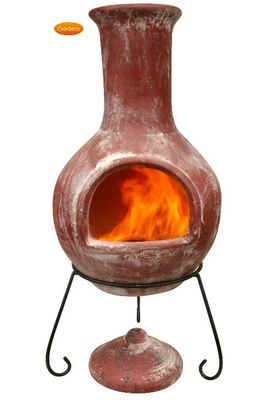
The second chiminea variety is the Clay range range.
Clay fires are a very popular choice among many because they look great in any garden and they often match other clay items you may own such as plant pots or vegetable forcers. The only drawback of a clay chiminea is that they can sometimes crack, particularly in cold weather. However, there are a few things you can do to reduce this risk.
Start by curing your chiminea. Resist the temptation to fill it straight up with huge logs and see how high you can make the flames come out of the top! Fill the bottom with two or three inches of sand and then burn some small pieces of wood kindling. Let this burn out naturally - do not tip water on it. Use small pieces two or three times and then gradually build up the sizes of the logs you put inside. Coal and fire briquettes are not advised for clay chimineas as they burn at higher temperatures and this can also cause the unit to crack.
Covers are recommended for clay chimineas, particularly during winter, as any water which forms a puddle inside the body can freeze and break the unit.
Still unsure? Call the Garden4Less team on 01283 543947 and speak with an expert today.
Like this post? Why not share it!
Tags
- Tags linked to this post:
- Chiminea (5)
Recent Posts
Comments
There have not been any comments on this post yet. Why not make the first?
You must be signed in to comment on our blog
Sign in now