|

Recent Feedback
Red Hunter Wellies
"The wellies arrived promptly and perfectly and just in time for the snow.
Great price and service"
Thank You
Alison Ford
Staffordshire
Chocolate Hunter Wellies
"I received the boots I ordered yesterday, 24 hours after they were ordered. Very efficient thank you, now I have lovely dry feet"
Louise
Hampshire
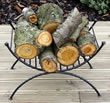
Garden Fire Basket
"Thank you for the prompt delivery (24hrs) of my garden fire, I love it. I am extremely impressed with your company"
Mrs Woodham
Yorkshire
Spear & Jackson Spade
"WOW!!!! What service. Arrived in less than 48hours. Shall be using you again and recommending to all my gardening friends!"
Mrs Smith
Kent
Windowsill Propagator
"Your service continues to please me. This is my 3rd purchase from you and the service along with the product is second to none."
Mr D Bryer
Surrey
Google Customer Reviews
Rated 4.8 out of 5
Read Reviews
|
|
|
|
| |
 |
|
 |
 |
|
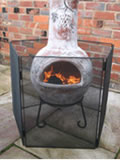
Chimenea, Chiminea or Chimnea
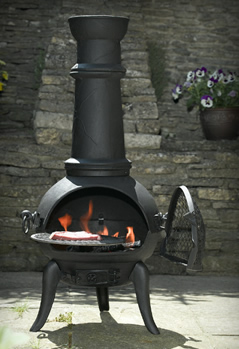
The correct English spelling is chimenea and is pronounced chim-ih-nee-ah. The correct definition is a free standing front loading fireplace or oven with a bulbous body and usually a vertical smoke vent or chimney.
Common misspellings are chiminea and chimnea. You may find these spellings on this page to aid customers searching using the incorrect spelling.
|

|
Mexican Origin
Chimenea originated from Mexico many hundreds of years ago and were traditionally made from clay. They were used as both a source of heat and also a means to cook or bake. Although clay is still popular there are now cast iron and steel alternatives available now.
Clay, Cast Iron or Steel Chimnea
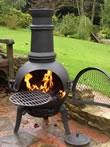
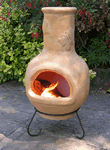
Cast iron chiminea and steel chiminea are much more durable than the clay versions. Special care must be taken with the clay models during the first use and then during periods of frost. Clay models can also crack and crumble if subjected to rapid change of temperature. This can occur when starting a fire on a cold day or a cold down poor of rain on a glowing fire.
Cast iron and steel chimnea will rust very quickly. Even after the first rain fall. This is usual and in many cases it is a desirable effect. Although they are painted with heat resistant paint it often can’t cope with the heat generated and will burn off quickly.
|
|
 |
 |
|
|
| |
|
|
|
|